Tesla has ceded its position as the world’s largest electric vehicle maker to China’s BYD after global deliveries fell for a second consecutive year, as intensifying competition, the expiry of US tax incentives and brand-related challenges weighed on demand.
While global EV sales rose 28 per cent last year, BYD overtook Tesla on an annual basis for the first time, driven largely by rapid growth in Europe and expanding overseas sales. The development has raised questions over Tesla’s ability to stabilise its core auto business even as it pivots toward future-focused ventures such as robotics and autonomous driving.
Tesla delivered 418,227 vehicles in the fourth quarter of 2025, down 15.6 per cent year-on-year and below market expectations. For the full year, deliveries fell to 1.64 million vehicles from 1.79 million in 2024, marking the company’s second straight annual decline.
Analysts said US demand weakened sharply after the expiration of $7,500 federal EV tax credits at the end of September, while competition intensified in North America and Europe from Chinese manufacturers and European automakers such as Volkswagen and BMW. Tesla also faced brand headwinds linked to CEO Elon Musk’s political commentary.
BYD reported record overseas sales of one million vehicles in 2025, up around 150 per cent from the previous year, and has signalled plans to further expand internationally.
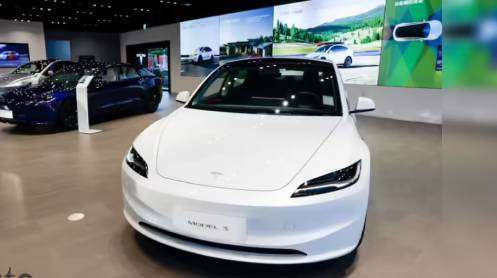
In response to softer demand, Tesla introduced lower-priced “Standard” versions of the Model 3 and Model Y in late 2025, though the move fell short of investor expectations for a more aggressive pricing strategy or a new mass-market model.
Despite weaker vehicle sales, Tesla shares rose about 11.4 per cent during 2025, as investor focus increasingly shifted to the company’s autonomous driving and robotaxi ambitions.
By Reuters